
TL;DR
TL;DR
Key Takeaways:
- Generative search engines summarize publisher content without direct clicks, requiring independent editorial teams to track brand co-occurrences and unlinked citations instead of relying solely on traditional web analytics.
- A 20-prompt audit run across ChatGPT, Perplexity, and Claude in fresh browser sessions reveals your true appearance rate, competitor co-mention sets, and the source domains feeding generative answers.
- Unlinked brand mentions provide powerful semantic weight in transformer models, often outperforming raw backlink counts when establishing topical authority for generative engine optimization.
- Structuring site archives with lean llms.txt files and organizing research findings into explicit HTML tables significantly improves crawler ingestion and LLM extractability.
Introduction
Independent publishers face uncredited generative summaries every day when generative search engines synthesize proprietary reporting without attribution or direct clickable links. You notice traffic dropping while overall topic interest grows across your beat.
Monitoring brand visibility in AI answers requires moving beyond traditional analytics because generative tools rely on custom prompt arrays and lightweight tracking workflows instead of keyword ranks.
Why Independent Publishers Face Zero Visibility in ChatGPT and Perplexity
Independent publishers watch traffic decline while topic interest grows across their beat because generative engines summarize proprietary reporting without attribution or direct clickable links. Contently notes that AI search visits grew 42.8% year over year, rising from 15.6 billion in Q1 2025 to 27.4 billion in Q1 2026. Standard monitoring tools miss these shifts entirely, leaving teams blind to how models frame their work.
Generative engines frequently pull facts and quotes from independent reporting and display them directly in chat interfaces without linking back to the original source URL. This zero-click phenomenon drains ad revenue and reader acquisition channels for smaller editorial teams.
Publishers must therefore track brand co-occurrences and unlinked citations to measure their true reach inside closed AI ecosystems. Building this visibility requires shifting away from legacy keyword ranking tools toward custom multi-engine monitoring workflows.
Why Traditional Analytics Miss AI Search Traffic and Answer Erosion
Traditional analytics show flat organic growth while your core reporting topics surge across industry discussions because generative search captures traffic before users ever reach your server logs. GA4 cannot capture queries answered right on the results page where summaries satisfy user intent without a click.
Semrush research estimates that AI search visitors convert 4.4x better than traditional organic search visitors.
That valuation stat highlights why missing referral clicks turns invisible losses into a direct threat to your publication revenue.
Teams running content audits find that missing referral clicks correlate directly with AI overviews satisfying search intent before anyone clicks through to read the full article. Modern measurement frameworks track metrics like assisted revenue and referral conversion via dedicated toolkits such as the Semrush AI Visibility Toolkit or Adobe Brand Visibility to capture these interactions.
Building a Custom Prompt Array for Multi-Engine Auditing
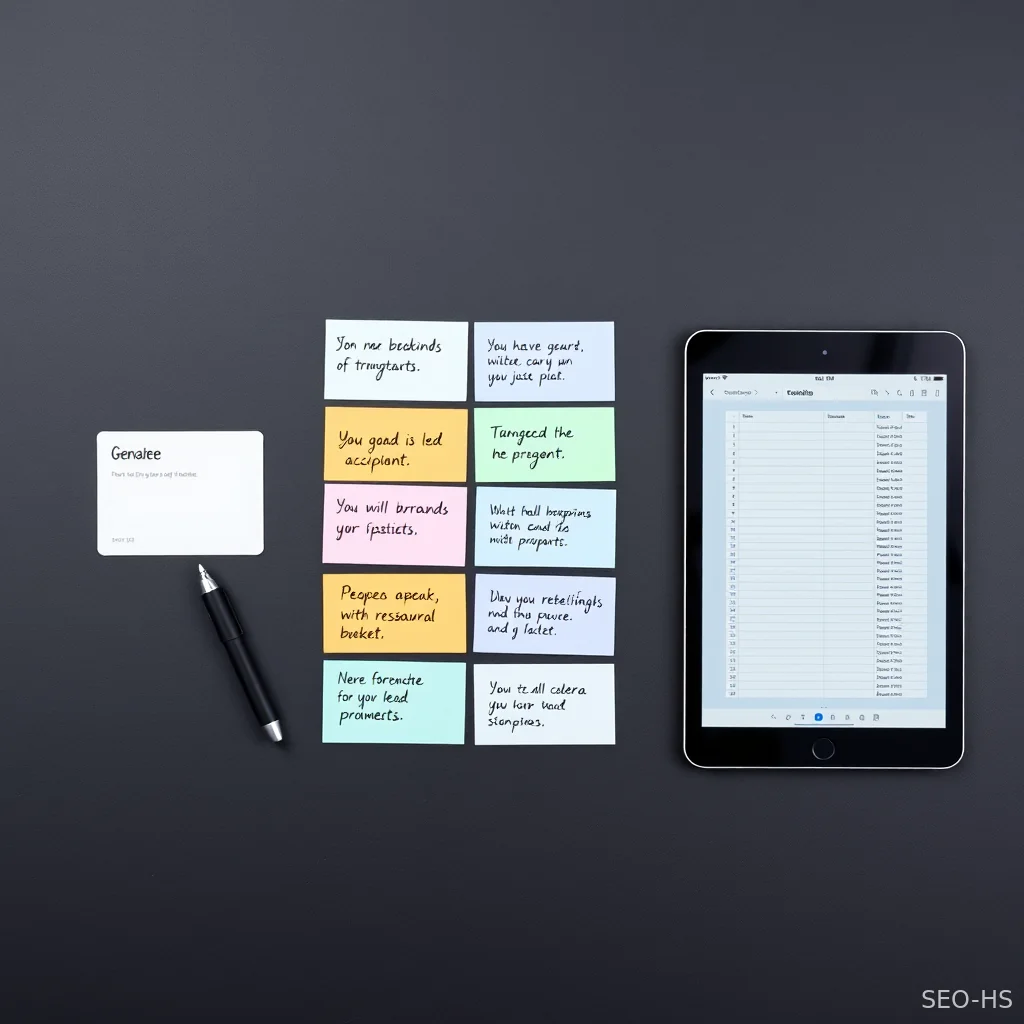
Start by listing twenty prompts divided across four distinct categories to see how engines talk about your beat. The set covers brand queries, category discovery terms, specific use case questions, and head-to-head competitor comparisons.
Run those exact queries across ChatGPT, Gemini, and Perplexity in fresh browser sessions. Clear your chat history and disable personal memory so past searches do not skew the results.
Log every response in a simple spreadsheet with columns for your brand appearance rate, co-mentioned competitors, and the underlying source domains cited by the model.
Fresh sessions prevent the engine from flattering you based on past visits, giving you the unvarnished baseline your audit requires without interruption.
Navigating Divergent Engine Architectures Across ChatGPT, Perplexity, and Claude

Independent publishers tracking generative search engines quickly notice that source selection varies widely across platforms, making a single optimization strategy insufficient for your beat. GrowthX tracked citation distribution and found that 91.07 percent of cited URLs appeared in only one engine while just 2.37 percent showed up across all three.
Perplexity relies heavily on live web retrieval and indexes community platforms like Reddit, which accounts for 46.7 percent of its top-ten citation share according to the GrowthX AI search guide. ChatGPT and Claude blend parametric training data with retrieval-augmented generation, requiring publishers to balance long-term entity associations with fresh, indexable content.
Operators running manual audits notice that Perplexity surfaces community threads instantly while ChatGPT leans on established authority domains. Understanding these architectural gaps lets you tailor your publishing strategy to match how each specific engine discovers and validates independent sources.
How Unlinked Brand Mentions Drive Generative Engine Citations
Unlinked brand mentions where a company name appears in published text without a hyperlink teach large language models to associate that brand with a specific topic through branded co-occurrence.
GrowthX data across 75,000 brands reveals that branded web mentions correlated with AI Overview visibility at 0.664, which significantly outperforms Domain Rating at 0.326 and raw backlink counts at 0.218 as noted in the GrowthX research.
Contently confirms that unlinked mentions carry the exact same semantic weight inside model training and retrieval corpora as traditional backlinks in their brand mentions report.
Teams running these audits know that chasing anchor text links misses the core mechanism because generative engines read proximity and frequency across published text rather than link graphs alone.
Structuring llms.txt Files for Independent Publishing Sites
Publishers formatting site archives can use the llms.txt generator to format directories for streamlined AI crawler ingestion. An optimized llms.txt file provides clean markdown summaries of core editorial archives, making it easier for Perplexity and Claude bots to parse proprietary reporting without processing entire site directories.
Poorly structured markdown or overly bloated site files can lead AI scrapers to misinterpret article hierarchies or ignore archive pages entirely. Keeping index files lean and strictly hierarchical prevents scrapers from timing out on deeply nested folders, which ensures your core coverage remains fully accessible to retrieval bots.
Clean extraction depends entirely on predictable file paths and concise section summaries, which guide crawlers directly to your most authoritative reporting without forcing models to guess article relationships. This technical clarity keeps your archives readable for incoming AI crawlers.
Optimizing On-Page Content Structure for LLM Extractability
AI models extract data from structured HTML tables at an 81% rate compared to just 23% for standard unstructured prose. You can organize your research findings into clear comparison grids so crawlers parse core metrics without guessing intent, making your key findings immediately readable for search engines.
Contently notes that LLMs extract data from tables at that high rate, which helps publishers turn complex research into an easily digestible format for automated parsers. Teams that run these migrations know that pairing tables with explicit schema properties like Organization, sameAs, about, and mentions secures entity clarity for every page.
This structure confirms for crawlers that the associations they infer match your publishing intent, reducing the risk of misattribution in generative outputs. Pairing structured tables with clean entity markup gives AI bots the exact signals they need to cite your work accurately.
At a glance:
| Content Format | Extraction Rate | Impact on Crawlers |
|---|---|---|
| Structured HTML Tables | 81% | Immediately readable for search engines and crawlers |
| Standard Unstructured Prose | 23% | Requires parsers to guess intent from narrative text |
Detecting Unlinked Citations and Content Summarization Without Attribution
When manual prompt audits reveal verbatim paragraph summaries in ChatGPT without a clickable link, teams realize proprietary reporting is feeding the model while traffic drops. Teams that run these checks regularly find that generative engines often attribute their data to third-party roundups or forum discussions instead of the original article.
Tracing those unlinked citations back requires looking at the source pages cited in the output.
When an LLM summarizes an investigative piece under a competitor name or outdated framing, the error usually traces back to an unlinked mention on an industry forum or aggregator site that the crawler fetched during retrieval.
Fixing that attribution leak means finding the exact page feeding the error and publishing a direct correction there.
Automating Visibility Audits Without Enterprise Budgets
Building a functional tracking workflow without paying for enterprise software costs a fraction of commercial tooling when you string together basic automation options.
Set up a workflow inside n8n where a code node defines your brand name, a list of category questions, and your main competitors.
Connect that node to an HTTP request that sends your prompt bank directly to the OpenAI API on a weekly schedule.
A second code node checks every response for your brand name and competitor mentions, then logs the results automatically into a spreadsheet.
Teams running this setup in 2026 should note that API outputs differ slightly from live browser interfaces because stateless retrieval setups miss user-session context.
Evaluating the Trade-Offs Between Manual Audits and Monitoring Software

Manual checking costs nothing and shows what real users experience, but you can only run so many prompts before fatigue sets in. The landscape of monitoring software has evolved with off-the-shelf AI visibility toolkits and enterprise solutions like Adobe Brand Visibility, shifting the manual vs. automated trade-off analysis as platforms streamline cross-engine tracking.
Teams that run this know that building custom scripts saves money, but maintaining scrapers takes constant engineering hours when search interfaces change.
| Approach | Cost | Coverage | Maintenance Effort |
|---|---|---|---|
| Manual audits | Zero dollars | Single prompt sets | High time investment |
| Custom scripts | Development time | Automated API runs | Constant debugging |
| Monitoring tools | Subscription fees | Multi-engine dashboards | Low ongoing effort |
Weigh your engineering hours against platform costs before committing to a permanent tracking stack.
Maintaining Editorial Independence in an AI-First Publishing Model

Protect your editorial integrity by prioritizing verifiable first-party research and unique journalistic reporting that AI models cannot easily fabricate.
First-party research serves as the definitive shield against AI answer erosion, ensuring your original reporting remains the source material models must cite.
Combine automated visibility tracking with human editorial oversight to ensure content remains aligned with reader trust rather than algorithmic conformity.
This dual approach secures independent authority and durable citations across ChatGPT, Perplexity, and Claude without compromising your editorial standards.
Frequently Asked Questions
Tracking brand visibility in generative search relies on a mix of manual prompt arrays, custom Python or n8n automation scripts, and specialized AI monitoring tools. Teams often start with structured manual checks before investing in automated multi-engine platforms.
Winning visibility in AI search requires building strong semantic associations through unlinked brand mentions, optimizing site files for crawler ingestion, and structuring core research data into HTML tables that LLMs parse easily.
Monitoring AI search visibility involves running a fixed prompt bank across engines like ChatGPT, Perplexity, and Claude in fresh browser sessions. Publishers log brand appearances, competitor co-mentions, and underlying citation source domains monthly.
AI visibility is driven by distributional patterns and branded co-occurrence in training corpora and live retrieval indexes. When independent publications frequently mention your brand beside target topic terms, models learn to associate and cite your entity.
Traditional analytics fail to capture AI search traffic because generative summaries satisfy user intent directly on the search results page without triggering clicks to your server logs or GA4 properties.
A custom prompt bank includes twenty queries divided across brand names, category discovery terms, specific use cases, and competitor comparisons. Running these exact queries in stateless browser sessions establishes an unvarnished baseline.
An llms.txt file provides a clean, hierarchical markdown summary of core editorial archives, allowing AI crawlers like Perplexity and Claude bots to ingest proprietary reporting efficiently without timing out on nested folders.
Unlinked brand mentions teach large language models to associate a company name with specific subject matter through branded co-occurrence. Generative engines read this proximity across published text just as effectively as traditional backlinks.
Teams can build lightweight tracking workflows using automation platforms like n8n combined with the OpenAI API. A scheduled script submits prompt arrays, checks responses for brand and competitor mentions, and logs results into a spreadsheet.
Generative engines rely on different architectural retrieval models, with Perplexity indexing live community discussions heavily while ChatGPT and Claude blend parametric memory with targeted retrieval indices.
Related Articles