Assuming a platform natively handles out-of-stock items and seasonal URL shutdowns safely leads straight to lost indexation and traffic crashes.
Automated inventory sync scripts often update database flags while ignoring HTTP headers, creating widespread soft 404 errors across large catalogs.
Structural hibernation preserves URL history, backlink equity, and ranking signals during off-peak months much better than permanent deletion or broad 301 redirects.
Reactivating seasonal pages four to six weeks before demand peaks gives search bots sufficient time to recrawl and reindex refreshed content.
Introduction
Platforms get evaluated on interface speed and checkout flows while inventory scripts rewrite search visibility behind the scenes.
AI documentation vendor security questions require rigorous evaluation of RAG grounding limits, custom hallucination scoring thresholds, and vector database chunking behavior.
Pristine marketing demos often fail on proprietary API references because standard training distributions lack internal routing logic and authentication parameters.
Mandatory human-in-the-loop review sign-offs and digital provenance tracking protect technical documentation from silent integration failures and unauthorized model training.
Staging environment proofs-of-concept should test vendor platforms against deliberate edge cases, deprecated endpoints, and conflicting parameter tables before production rollout.
Introduction
AI documentation vendor security questions are the set of technical inquiries required to evaluate whether an automated writing tool can safely interact with proprietary API references without injecting hallucinated endpoints or leaking internal credentials. Commercial AI demos look pristine on standard markdown, but proprietary API structures break down under real-world model drift. Engineering teams need a reliable vendor interrogation framework that shifts technical due diligence from surface-level feature checklists to rigorous system-level audits.
Mastering a rapid twenty-minute technical audit protects agency resources from unpaid pre-sale labor while uncovering immediate revenue leaks that win enterprise pitch calls.
Evaluating exterior signals and public index depth allows growth teams to diagnose site infrastructure flaws without requiring immediate analytics or search console access.
Uncovering e-commerce index bloat and parameter proliferation helps identify where valuable search bot crawl budget is wasted on low-quality duplicate URLs.
Translating technical speed deficits and mobile friction into monetary terms connects loading delays directly to lost customer conversions and pipeline velocity.
Detecting broken redirect chains and migration wounds before meetings provide immediate diagnostic authority to refute false assumptions about algorithm penalty drops.
Introduction
You do not have two weeks to spend on an unclosed prospect. When you sink fifteen hours into a manual crawl before a pitch, you run the risk of doing free work for a client who might ghost you while a faster competitor wins the deal with a few sharp observations.
Choosing an SEO platform for a high-SKU catalog requires evaluating crawler resilience against millions of dynamic URLs rather than relying on clean vendor sales demos.
Uncontrolled faceted navigation generates millions of redundant filter permutations that exhaust crawl budgets and trigger severe index bloat.
Parent-child SKU architectures consolidate variant link equity onto single parent URLs, preventing keyword cannibalization and thin-content penalties.
Executing a hands-on proof-of-concept test with representative sample data exposes processing bottlenecks before enterprise software procurement decisions are finalized.
Why Millions-of-SKU Catalogs Break Standard SEO Software
Most tools look great in a clean demo environment until you point them at three million SKUs and watch the crawler time out. That failure leaves technical teams to deal with broken canonical tags and unscalable manual audits across thousands of pages missing traffic.
Establish a written governance model that divides responsibilities into fixed corporate elements, flexible templates, and fully local operations to eliminate brand drift across regional markets.
House multi-location pages under subdirectories rather than subdomains to pool domain authority and help search engines recognize an interconnected brand structure.
Incorporate unique local texture such as staff bios and neighborhood landmarks on city landing pages to prevent ranking suppression from duplicate text blocks.
Utilize bulk verification workflows for Google Business Profiles while maintaining exact match consistency across store codes, websites, and phone numbers.
Allocate marketing budgets based on market maturity by weighting new branches toward upper-funnel awareness and mature offices toward lower-funnel conversion capture.
Introduction
Juggling regional clinic dashboards creates an administrative burden for regional marketing directors at multi-location dental practice groups. Expanding a practice group across ten distinct markets creates immediate friction when corporate search strategy conflicts with what local patients type into search bars. Managing separate clinic locations requires balancing unified brand authority with hyper-local relevance.
Inventory depletions trigger search visibility issues when server response codes conflict with visible page messaging about stock availability.
Soft 404 errors consume crawl budget because servers return a 200 OK success status while page content indicates a missing product.
Temporary supplier delays warrant keeping URLs live with structured data updates to preserve backlink value rather than using aggressive redirects.
Permanent product discontinuations require 301 redirects to active category pages to pass link equity effectively and prevent crawl waste.
Introduction
When inventory hits zero, out of stock product page seo becomes an immediate operational puzzle. You watch rankings slip while servers continue treating missing items as healthy pages, creating hidden indexing traps that drain your crawl budget.
Which file format should you choose for AI optimization? Understand the technical differences, implementation strategies, and real-world examples from Anthropic, Cloudflare, and Zapier.
67% of international websites have broken hreflang implementation, losing 30-40% of their international traffic. This guide shows you the exact 5-step framework to implement hreflang correctly and capture the traffic your competitors are missing.
Key Takeaways:
Wrong hreflang = UK visitors see US pricing = lost revenue
Implementation takes 6-8 weeks but pays back in 3-6 months
Not because of a Google update. Not because of bad content. But because your monthly SEO audit missed a critical Core Web Vitals failure that happened 3 weeks ago.
Sound familiar? You’re not alone.
The $4.97 billion question: Why are we still using outdated SEO tools that only tell us what’s broken AFTER it costs us thousands in lost revenue?
Here’s the game-changer: The best technical SEO tools don’t just find problems. They fix them. Automatically. In real-time. Before Google even notices.
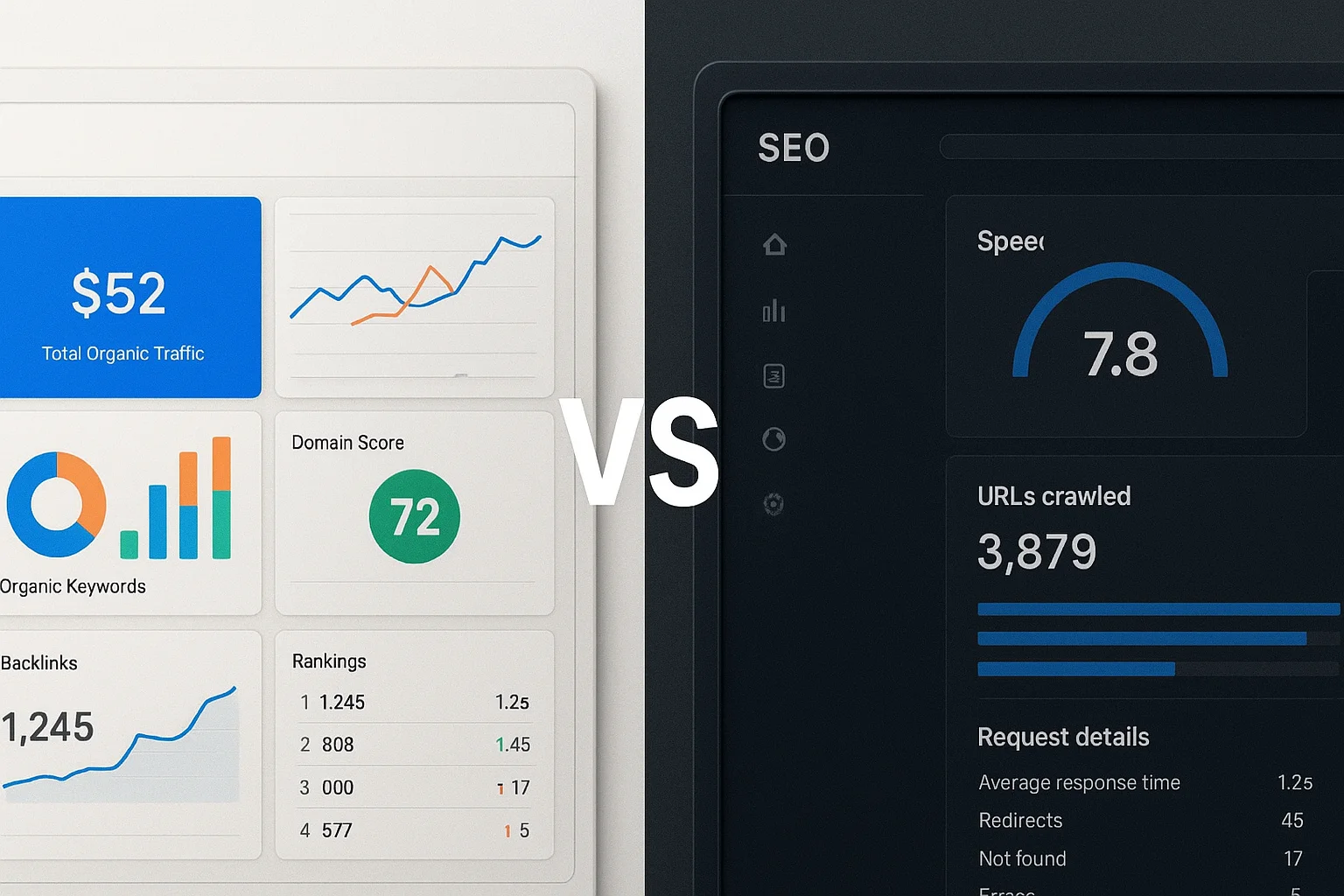
SE Ranking ($52/mo) = all-in-one SEO toolkit with rank tracking, keywords, and client reports. JetOctopus ($237/mo) = technical SEO beast that crawls 250 pages/second. Pick SE Ranking if you need general SEO tools on a budget. Pick JetOctopus if you have 100K+ pages and need serious technical analysis. Some teams use both because they do completely different jobs.
You’re here because you need an SEO tool. Good news - I’ve spent way too much time comparing SE Ranking and JetOctopus so you don’t have to.